Workflow and requirements mapping
We trace the current process, users, data, and exceptions so the software addresses the work that actually happens.
Built for what’s next.
03 / DEVELOPMENT
Software shaped around your way of working.
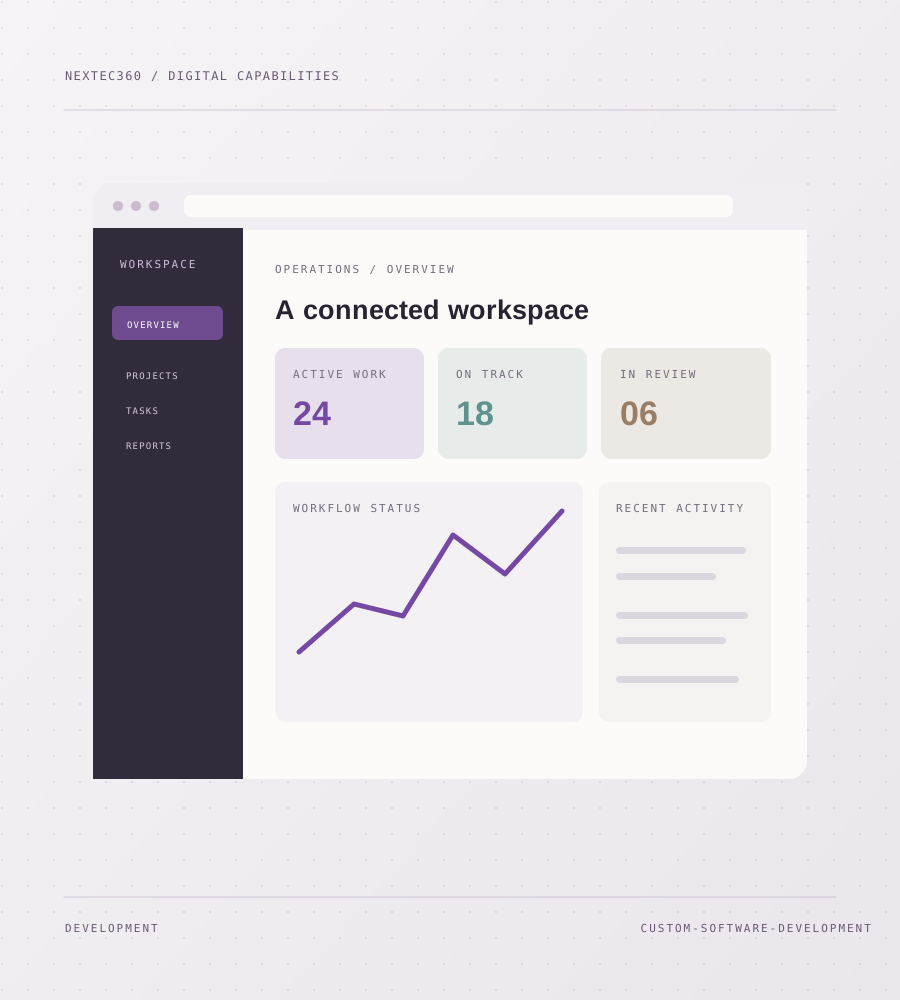
When off-the-shelf tools force your team into workarounds, custom software can connect the right people, information, and decisions in one purposeful system.
01 — THE OPPORTUNITY
Repeated spreadsheets, disconnected systems, and manual handoffs can hide the real state of work. We look at the process behind the request, then build software that supports it without introducing needless complexity.
02 — THE WORK
Practical work shaped to the brief, with clear outputs at each stage.
We trace the current process, users, data, and exceptions so the software addresses the work that actually happens.
We define the core modules, permissions, integration boundaries, and data model before implementation.
We create the interfaces and business logic for internal tools, portals, operational platforms, or other focused software products.
Existing tools and data sources can be connected where appropriate, with testing and documentation for the team that will operate the system.
03 — ILLUSTRATIVE STARTING BRIEF
A team passes information between spreadsheets, email, and separate systems to keep one process moving.
Map the handoffs, define the data each role needs, and build the smallest connected system that removes repeated work.
An example of how we might frame a project, not client work.04 — THE APPROACH
Every project has its own scope. These stages make the work understandable and reviewable from the start.
We talk through the work, edge cases, and existing tools with the people who use them.
We separate necessary capabilities from later ideas, then agree on the architecture and delivery milestones.
Working software is reviewed throughout development so the team can test the direction before the entire system is complete.
We check access, reliability, and handover needs, then plan support and future changes with the owners.
We define the scope and useful outputs before building. You can review the direction as it develops, and we plan the handover around the people who will own the result. If a different tool or smaller solution is the better fit, that belongs in the conversation too.
06 — PRACTICAL QUESTIONS
The details of a good engagement are specific. Here are a few of the questions we work through early.
It is worth considering when the workflow is important and existing products cannot support it without costly workarounds. We also consider adapting an existing tool when that is the better answer.
Yes, if the underlying rules and data can be clarified. We usually start by mapping the current steps and identifying the smallest useful part to digitize.
We review its quality, ownership, and structure before planning migration or integrations. That prevents a new system from inheriting avoidable problems.
HAVE A PROJECT IN MIND?
Tell us what you are trying to improve. We’ll talk through the scope, the decisions to make, and the most sensible first step.