Use-case assessment
We map the task, inputs, success criteria, risks, and existing tools before deciding whether an agent is the right approach.
Built for what’s next.
05 / AI SERVICES
Give repetitive work a defined path forward.
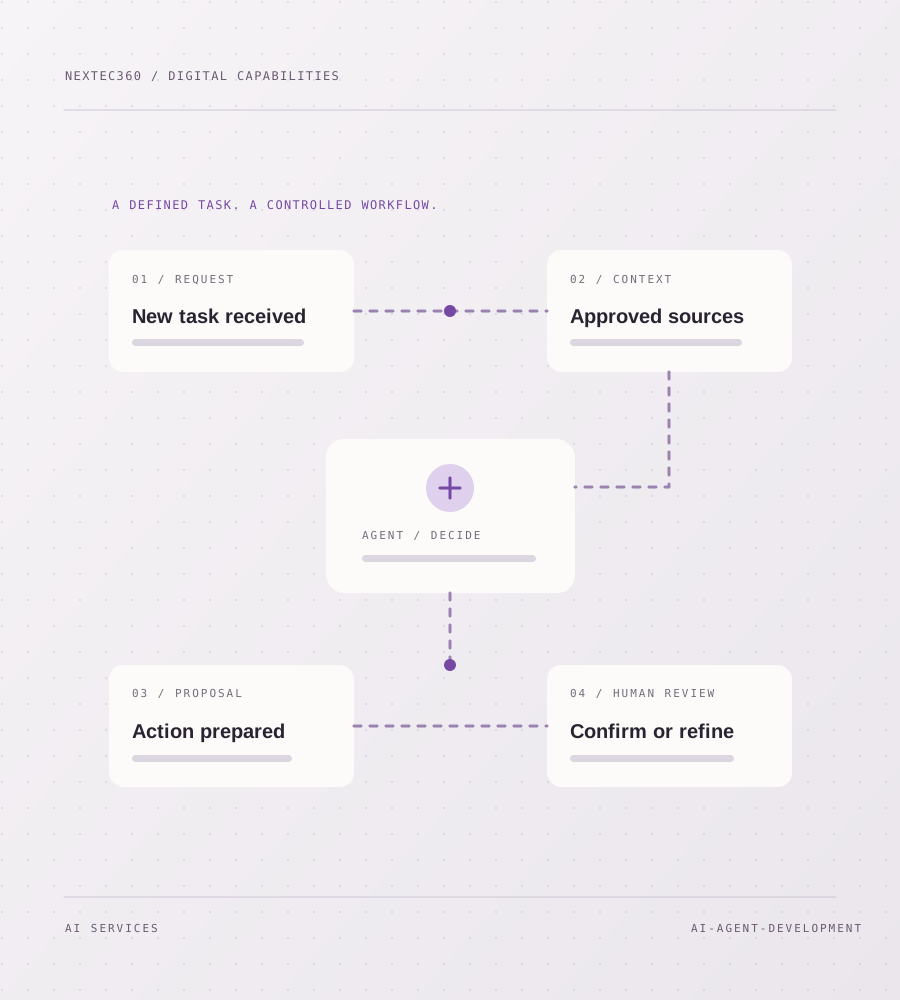
We design AI agents for bounded tasks: the right tools, the right information, clear checks, and a visible handoff when a person should make the decision.
01 — THE OPPORTUNITY
An agent is only helpful when its task is clear and its actions can be checked. We identify repeatable work, decide what the agent may access or change, and design human review into the points that need judgment.
02 — THE WORK
Practical work shaped to the brief, with clear outputs at each stage.
We map the task, inputs, success criteria, risks, and existing tools before deciding whether an agent is the right approach.
We define which systems the agent can read or use, what it may produce, and where approvals or limits belong.
We build the focused workflow, connect approved data or tools, and add the controls needed to inspect its decisions and outputs.
We test representative cases, including failures and ambiguous requests, then refine instructions, checks, and escalation paths.
03 — ILLUSTRATIVE STARTING BRIEF
A team spends time moving routine requests between tools, while important exceptions still need a person to decide.
Define the repeatable task, the tools an agent may use, and the points where it must ask for review.
An example of how we might frame a project, not client work.04 — THE APPROACH
Every project has its own scope. These stages make the work understandable and reviewable from the start.
We choose a workflow with a clear trigger, inputs, and measure of success.
We define tool access, sensitive data rules, and the decisions that remain with people.
We implement the agent and test common, unusual, and failure cases against the agreed task.
We review outputs and handoffs after release, then adjust the workflow as real use reveals new cases.
We define the scope and useful outputs before building. You can review the direction as it develops, and we plan the handover around the people who will own the result. If a different tool or smaller solution is the better fit, that belongs in the conversation too.
06 — PRACTICAL QUESTIONS
The details of a good engagement are specific. Here are a few of the questions we work through early.
A chatbot mainly handles a conversation. An agent may also use tools to carry out a defined sequence of work. The scope and permissions matter more than the label.
Possibly, if those tools offer suitable interfaces and access controls. We assess integrations and data requirements before choosing the implementation.
We define approval points, action limits, logs, and exception handling around the specific workflow. High-impact decisions should not be delegated by default.
HAVE A PROJECT IN MIND?
Tell us what you are trying to improve. We’ll talk through the scope, the decisions to make, and the most sensible first step.